How to Sing the Songs You Write: Singer-Songwriter Examples & Coaching
One would think that singing your own songs is much easier than singing a cover - after all, you’re the one who wrote it! But actually, singing your own music can be just as challenging (if not even more!).
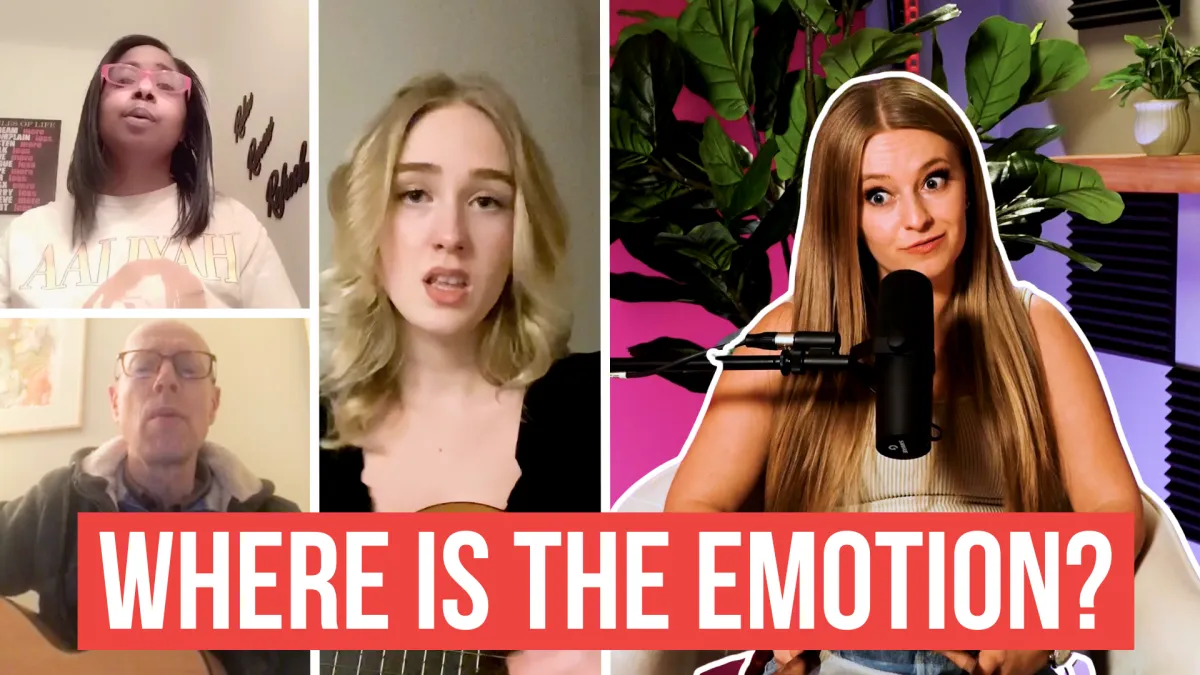
Recently, 3 singers submitted videos of themselves singing one of their original songs for a vocal evaluation. There were some really great things that popped up when I was reviewing their videos and so I wanted to share some of those things with you. If you’re a songwriter or you want to start writing and singing your own songs, keep reading.
**Scroll down to the bottom of the page to watch/listen this episode on our podcast on Spotify, Apple Podcast or YouTube.
Repetition vs Contrast
🎙 Lara: You have the repetition part down - it’s stuck in my head! Now we just need more contrast to keep it interesting.
The first singer-songwriter I looked at was Beverly. She mentioned that all of her songs sound the same from start to finish and that she doesn’t know how to change that. While we looked at a couple of vocal things she can adjust, I mostly focused on helping her with her songwriting.
Whenever we’re writing a song we need to find the right balance between repetition and contrast. Repetition helps to remember your song and get it stuck in our heads and contrast makes sure that it doesn’t get boring! Every phrase in Beverly’s song had the same melody, meaning there was a lot of repetition and no contrast. This makes it not just very repetitive, but also very difficult for the audience to tell whether we’re in the verse or chorus.
The rule of thumb is to create repetition within a song section (within a verse or within a chorus, etc) and contrast between song sections (going from the verse to the chorus for example). This makes it much easier to follow along and know where we are in the song. Plus, it doesn’t get boring to listen to because there’s contrast!
Here are some quick tips to create contrast in your songs:
Start the melody on a different note
Start the melody on a different beat
Change the rhythm of the melody, change the note length (from short notes to long notes)
Of course, we can also create contrast in our song just with the vocal performance! But a solid song structure with enough contrast is still necessary to not get too repetitive, even if the vocal performance is full of contrast.
💡 Takeaway: Songwriting is all about creating repetition and contrast in your songs. Find the balance between the two!
If you’re a beginner songwriter and you’d love to learn more about how to write songs (even if you don’t play any instruments), get my Songwriting For Singers guide here.
From Monotone To Dynamic Singing
🎙 Lara: When we have options, we can pick how we want to sing a song… when we don’t, the notes just come out the way they come out.
Geertjan has the foundation—good pitch, tone, breath—but he said that he doesn’t feel musical when he’s singing. Isn’t that interesting? Even though he wrote this song, he was struggling to make it sound emotional. I gave him some tips on how to make it sound a bit more natural, like getting lazier with the articulation of the words, modifying some vowels and playing around with volume/tone.
The secret to sounding more emotional or natural in our singing - no matter what we sing - is dynamic singing. Dynamic singing shapes your tone, embellishments and volume, making your songs come to life more. If you’d like to learn more about how to sound more dynamic, check out this post.
💡 Takeaway: Just because you wrote the song and feel emotionally connected to it, doesn’t mean you’ll automatically sound emotional too. Work on dynamic singing to match the vocals to your emotions.
Discovering Your Voice in Your Own Song
🎙 Lara: There’s something really special about working on original songs… you don’t have a reference.
Linette came in with an original song with lots of emotion and she sounded absolutely beautiful. But she said that she’s lacking power in her head voice, that everything get’s too thin up there. When I then listened to her sing these high notes I thought she absolutely nailed it and that she sounded so angelic. We’re so used to hearing high notes with power that even when we sing our own songs we sometimes feel pressured to add that same power to our songs too. While singing high notes with power is definitely a great skill to develop, it’s not always necessary to sing with power. Sometimes softer notes can be just as powerful and emotional - if not even more!
When you’re singing your own songs and you’re feeling frustrated with your voice because certain notes don’t come out exactly the way you wanted them to, ask yourself if it’s actually really necessary to sing it the way you envisioned it or if an alternative way to sing those same notes could be just as meaningful. If you’re set on singing it that way and your voice isn’t behaving then you know that you’ll need to work on your vocal technique some more to expand your skill set. But don’t shy away from trying out something else. You never know, you could stumble across something you really love and that’s easier to sing.
💡 Takeaway: Soft notes can be just as powerful as loud notes. Ask yourself if the song and story really needs more power or if it’s just your ego talking 😉
Your Song, Your Choice
🎙 Lara: “Take what you like, leave what you don’t like. At the end of the day, this is your song.”
Working on artistry and technique are two different things. Technique is here to support your artistic choices, as it helps you grow your vocal skill set so that you have a bigger toolbox to choose from. But when it then comes to artistry, it’s your choice which one of these tools you want to use.
While I’m happy to make recommendations of what I think could sound really cool in your song, you don’t have to apply my suggestions. Whenever someone makes suggestions, give them a try and see what that felt like before you make a decision on whether or not you want to stick with it.

If you want to have a look at how I coached these three singers in more details, check out the full episode on YouTube, Spotify or Apple Podcast below.
Check Out The Full Video With Detailed Breakdowns Here
Prefer Listening To The Podcast On Your Favorite Platform? Listen Below.